


The post Puppy-Proof Your Apartment appeared first on Fath Properties Blog.
]]>
Puppy-Proof Your Apartment
You took the plunge and got yourself a puppy after deciding what breed would work best. After making sure your pup has all the appropriate vaccinations to be around other dogs, you’ve considered where to take your pup to have fun, frolic, and make friends in Dayton, Cincinnati/Northern Kentucky, or Dallas. And, if you haven’t done so already, now is the time to puppy-proof your apartment.
When I got my little guy 10 years ago, he was 2.5 pounds of fluff resembling a Beanie Baby (remember those?). He was 12 weeks old and (supposedly) a purebred Maltese. Turns out he’s part Maltese, part Bichon Frisé, and part rascal. His previous owner trained him on puppy pads, so housebreaking was a nightmare since he thought it was okay to pee inside on the floor. Fortunately, he was not one to chew on anything. There was just one time – the first time I dressed him in a red raincoat with a yellow ducky on the back – that he took a good chew on my most expensive pair of shoes as revenge for the humiliation. Anyway, I digress.
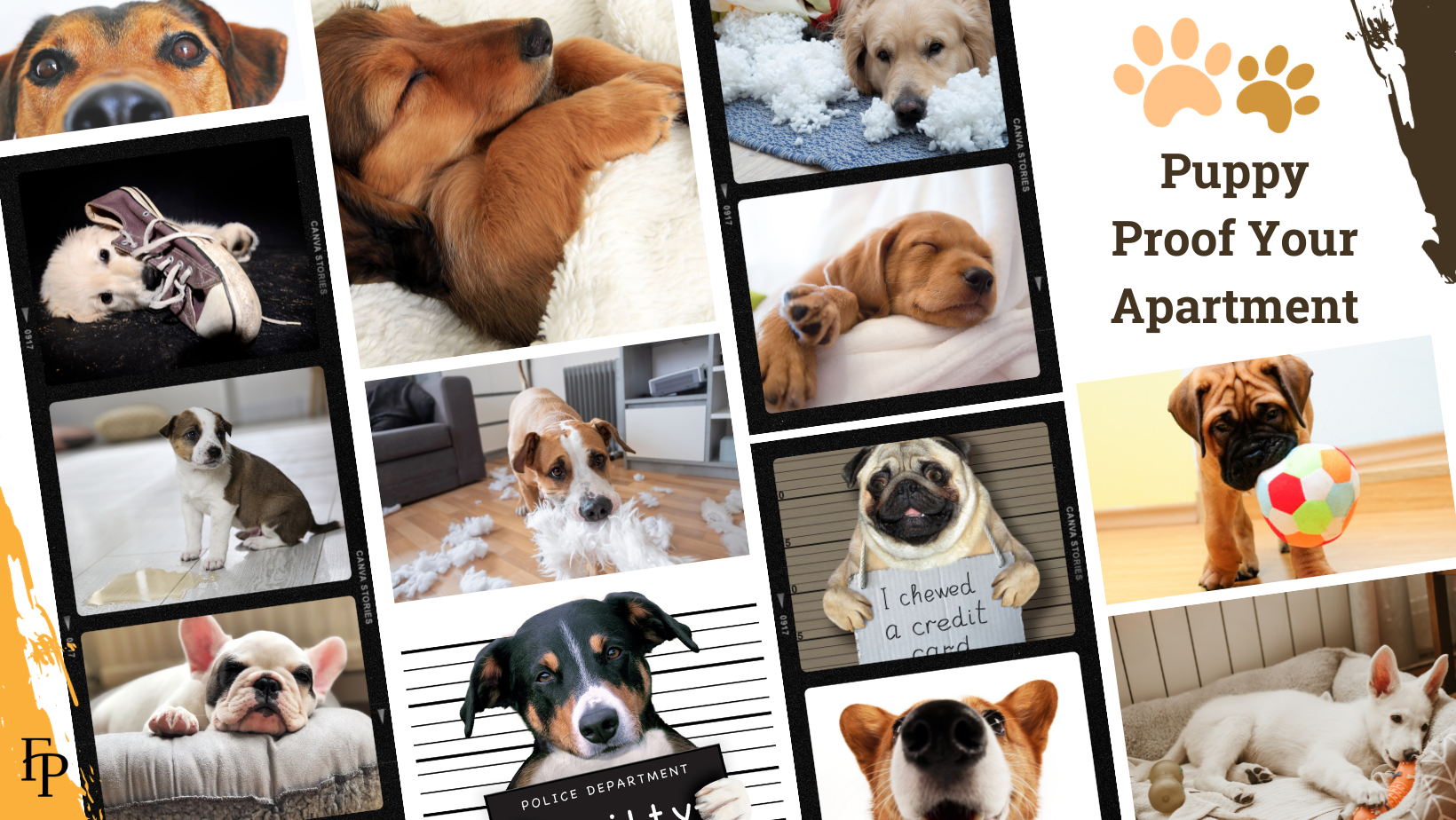
When you introduce a new pup to your home, it’s important to prepare your apartment. Puppy proofing serves two important purposes: one, it ensures your puppy stays safe, and two, that the puppy doesn’t damage your furniture, your stuff, or the apartment itself. Here are our suggestions for successfully puppy-proofing your apartment.
Protect Your Apartment From Your Puppy
- Tidy up. Before your puppy enters your home, put away anything you don’t want to wind up in Fido’s mouth. Ollie has a penchant for earbuds. My previous dog liked to eat undies. So think about “chewables” like shoes, remotes, chargers, baskets, decorative items — anything, really!
- Protect. Buy a lint roller and keep it handy for your clothes and furniture. Here are eight of the best. If you plan on snuggles with Rover on the couch, consider covering it with a washable blanket or a throw. If your pup is a breed that will shed – and most dogs do – think about a partial slipcover for the sofa and chair.
- Create a puppy space. It doesn’t have to be as elaborate as “Teddy’s House”, but a cozy spot for Fluffy’s bed or crate (if you are crate training), bed, and toys would be ideal. Preferably the puppy space is located in a low-traffic, out-of-the-way area that has easy-to-clean floors in case of accidents. You can also purchase a large heavy-duty plastic sheet or tray to place under the bed or crate.
- Consider crate training. Whether simple or luxe – Poppy won’t care – a crate gives your pup a safe place to retreat to when she is scared or anxious. Plus, it can help with housebreaking and future travel. It will also make visits to the vet or groomers a lot easier. Of course, you’ll use a carrier for quick trips and/or traveling on public transportation.
- Easy does it. Bringing Marshmallow into her new space and around new people is going to be exciting and overwhelming for your pup. Taking it slow will help you avoid accidents and anxiety with your new fur baby. Let the puppy get used to your place one room at a time, and use a dog (or baby) gate to block areas you don’t want the puppy in just yet.
- Get your puppy plenty of exercise. Take your puppy for lots of long walks and spend plenty of time outside to tire them out. This will ensure that they’ll just want to cuddle during your downtime instead of searching for mischief to get into.
- Spoil your puppy. A bored pet is a destructive pet. Provide lots of toys, especially rubber toys they can chew and squeaky toys they can pounce on. Brush them every day and keep their nails clipped. If you start good daily grooming habits while they’re in the puppy stage, you’ll get them used to the attention and build trust.
Protect Your Puppy From Your Apartment
We’ve looked at ways to puppy-proof your apartment to keep your stuff, your furniture, and your place safe from adorable but curious and mischievous pups, but it’s also important to make sure you keep your pup safe from potentially dangerous things in your home.
- Toxics. All medicines and supplements, cleaning products, detergents, and even certain plants are dangerous for puppies to ingest. Store these items behind locked doors or out of reach to avoid a visit to the emergency vet. The ASPCA Animal Poison Control has a list of people foods your dogs should not eat and a list of poisonous plants and flowers to help you protect your pet.
- Trash. The smell of garbage can be irresistible to curious puppies. So much to root through, especially when they’re left alone. Yet trash cans are full of objects that could harm your puppy, including bones, leftover onion or garlic skins from your latest cooking adventure, empty cleaning product containers – even the trash bag represents a suffocation danger. To keep your pup safe, get a good, sturdy trash can with a lid. And consider putting childproof locks on lower cabinets, doors, and drawers.
- Cords. Use cord protectors to cover household electric cords, cables, and wires. Teething puppies have a hankering to chew and they might see your power cable and charger cords as a chew toy. Protect your puppy from an electrical shock, burn to the mouth, and a visit to the vet by covering and securing those cords.
- Batteries. Remote controls, electronic toys, key fobs, and any other devices that contain batteries should be picked up and kept well out of reach. Not only can small parts be chewed and swallowed, but a swallowed battery is even more dangerous because it can cause burns to the soft tissue inside your pet’s esophagus on the way down. Disc batteries are especially dangerous!
- Heights. Puppies are clumsy and have fragile bones, so a seat on the couch or in a standing child’s arms puts them at risk of injury if they fall or try to jump. It’s best to keep your puppy off tall furniture and have young children sit when holding them until your puppy is less fragile and more coordinated.
- Toilet. Keep toilet lids closed, so the puppy won’t drink out of the commode or fall in.
- Doors & windows. Keep doors and windows closed at all times, so Spot can’t escape or fall out, and secure the cords that raise the blinds, so they won’t get caught around the puppy’s neck.
- Your bag. It’s very likely that your purse, backpack, gym bag, or diaper bag contains one, if not many, items that pose a threat to your new pup. Xylitol poisoning is becoming more and more common as it creeps into more products, like sugar-free gum, hand creams, etc. Preventative Vet has a list of 700+ products containing xylitol. Unintentional poisoning is one of the most common pet emergencies, so be sure to store bags in a closed closet or on a sturdy hook that is high and out of reach.
Now that you and Peanut are in a safe environment, snuggle up and enjoy your new bestie. And tell your dog we said hi.
The post Puppy-Proof Your Apartment appeared first on Fath Properties Blog.
]]>The post Best Dogs for Apartment Living appeared first on Fath Properties Blog.
]]>
For years I tried to discourage my daughter from adopting a pup. She lives in New York City, and to me, NYC apartments are too small and everything there costs too much to add a dog to the mix. But there are large parks, many dog-friendly shops and restaurants, and she did need the comfort only a dog can bring. So she adopted a pup with my blessings (not that she really needed them). She found a person who was fostering a litter of what were supposed to be part-Chihuahua puppies who were all part of the Berry family – Blueberry, Cranberry, Raspberry, Strawberry, and Blackberry. Cranberry soon became her bestie and although there’s definitely no Chihuahua in him, he’s shaped up to be a perfect apartment dog.
So what makes a perfect dog for apartment living? If you’re thinking about adopting a dog, you may be wondering how a dog will fare in an apartment, and what kinds of dogs are best for apartment living. Important considerations! As an apartment dweller, your first step is to check with your property manager to make sure your lease allows dogs and to determine if there are any restrictions on size or breed. Other factors, besides size, to consider when researching apartment-friendly dogs, include the breed’s personality, activity level, grooming needs, and how much noise the pup will make. I have a friend with a Basenji that never barks. Heaven! My little dog barks when leaves fall off trees or when a doorbell rings on TV. Not an ideal candidate for an apartment.
You can search for dogs by breed on websites such as Petfinder or Adopt-A-Pet, or click here for the top 10 best pet adoption websites. To further assist you, read on to learn about the best large and small dog breeds for apartments, and how to be a good dog owner in a multi-family setting.
Great Dog Breeds for Apartment Living
According to the American Kennel Club, apartment residents have a lot of options when it comes to choosing a furry best friend. They say, “Apartment dwellers have many dog breeds to choose from when selecting a pet. The size of your living space isn't the only consideration, because many large-breed dogs have lower activity levels and are more than happy to lounge on the sofa. There are dog breeds that require high energy and plenty of space, so they may not be best suited for a smaller apartment. Some small dog breeds with high energy are satisfied with indoor playtime or a brisk walk. Just make sure to consider your neighbors when choosing a dog: You'll want a pet that doesn't bark incessantly and is polite when meeting other people, in the elevator, on the stairs or in the lobby.”
Click here for Highland Canine’s comprehensive list of the best breeds for apartments; below are a few of their top-rated.
- Basenji: My friend’s Basenji is a delight. This low-shedding, short-haired dog breed was originally used for hunting, so they like to chase, fetch and play. Basenjis are primarily known as a “bark-less” breed, as their larynx only allows them to “yodel.” Weighing around 25 pounds, they are slightly larger than other small dog breeds for apartments on this list, but they’ll do fine in a smaller space as long as they get some daily exercise.
- Bichon Frise: My dog was supposed to be a purebred Maltese, but he’s most definitely part Bichon. While he does like to bark, we’ve been able to control his barking with training. Bichon’s are part of the poodle family – fluffy but smaller. Like Basenjis, Bichon’s don’t shed, so they’re considered hypoallergenic. They don’t bark too much, and at 11 pounds, they’re among the top small dogs that are good for apartments. Bichons are playful, so they need regular exercise and walks. They’re also highly trainable, can learn tricks, love to cuddle, and are great with children.
- Cavalier King Charles Spaniel: These sweet-faced dogs are small (13 to 18 pounds) so they don’t require a palace. King Charles Spaniels are smart, very trainable, and friendly with humans as well as other dogs. They love to be near their owners, so while King Charles Spaniels are perfect for apartment living, they don’t like to be left alone for long periods of time.
- French Bulldog: Smaller than their standard Bulldog cousins, French Bulldogs are small in stature (usually around 11 to 12 inches tall) but have big, goofy personalities. They have short hair, so you won’t have to groom them much, and they rarely bark, making them ideal small dogs for apartments. A daily walk or two should suffice for exercise.
- Greyhound: These lanky dogs are much larger than the other breeds on this list (females can reach 75 pounds, while males can weigh more than 80 pounds) but they are gentle giants who love a good snuggle. Bred originally for racing, Greyhounds need regular exercise such as daily fetch sessions – but they are true couch potatoes at heart. They also don’t bark much, which will make your neighbors happy. Best of all, many organizations find homes for retired racing Greyhounds, including Greyhound Welfare.
Apartment Dog Owner Etiquette
When living in an apartment community with a dog, a little etiquette – we call it petiquette – goes a long way. While you may love and adore your fluffy companion, that doesn’t mean your neighbor will. You can encourage positive neighborly relations by following a few simple tips. Click here for our Perfect Pettiquette post.
- Always pick up after your dog. It’s easy if you have the right bags and a bag dispenser.
- Always keep your pup on a good leash, unless at a dog park.
- Be cautiously sociable and let others know if your dog doesn’t like attention.
- Make sure your dog gets plenty of outdoor exercise.
- Train your dog, especially if Fido exhibits extreme barking, separation anxiety, or aggression. You may lose your permission to have a dog if neighbors complain about excessive noise or aggressive tendencies.
Dogs Welcome Here
Getting a dog is a big step, whether it is your first dog or you’re a seasoned dog parent, and especially if you live in an apartment community. Financial and emotional responsibility are key when opening your home and heart to a pet. You also have to be willing to put in the time and effort to train your dog to live in an apartment. And know that life will be different when you have a dog waiting for you at home. There will be sacrifices to your time – like going home after work to walk Spot instead of having a beer after work with co-workers.
Almost all Fath Properties communities are pet-friendly and a few even have dog parks. Start your search here! And tell your dog we said hi.
The post Best Dogs for Apartment Living appeared first on Fath Properties Blog.
]]>The post TAME THAT HAIRY BEAST appeared first on Fath Properties Blog.
]]>
Tame That Hairy Beast: Cleaning Tips Every Pet Owner Should Know
They are adorable and we love ‘em like they are our kids, but our sweets pets can be challenging to clean up after and can make it tough to keep our homes company clean. There’s pet hair and potty accidents. There are dirty paws and sharp nails. Some of us have messy eaters (not just four-legged, LOL) and some of us have chewers and shredders. Yes, our furry friends know how to make a mess. Being able to manage and even prevent these messes can make routine cleanup a lot easier and help prevent your frustration levels in check. Perhaps it’s the shedding that drives you nuts or the kitty-litter scatter. Maybe it’s funky pet odors, or water bowl splashes. Everyone has pet-owner woes and we’re here to help you tame that hairy beast with these tips designed to keep your home as clean as it was before you had pets. Unless, of course, you’re an utter slob in which case we’ll need to talk to your mom LOL.
HAIR
- Lint Roller. A lint roller is a great way to remove pet hair from your clothes, but you can also use it on couches, chairs, curtains, and other furnishings in your home. Lint rollers usually have a wide surface area and are effective at picking up pet hair. And BONUS TIP: did you know they are also great for cleaning dust from your lamp shades? For the top 8 rollers that work great on pet hair, click here.
- Furniture Covers. I absolutely cannot say, “no!” when my pup asks to snuggle on the sofa or curl up next to me in bed. If, like me, you can't keep pets off your furniture, use covers to protect the fabric from damage and unwanted odors. Most furniture covers are designed to be easily removed and washed. Wash regularly to help maintain a clean and odor-free environment. The Spruce Pets rate these the top 8 choices. In addition to protecting against pet hair, furniture covers can also guard against stains caused by spills, accidents, or tracked-in dirt. Choose a cover made from pet-friendly material that is durable and resistant to wear and tear. Avoid materials that may be easily punctured or torn by your pet's claws."
- Vacuum & Sweep. Keep pet hair from taking over your home by vacuuming and sweeping regularly, maybe even daily. Last summer I cared for my brother’s two yellow labs for a month while he and his wife were traveling. As the owner of a 12-pound non-shedding dog, I was overwhelmed by the amount of hair. Fortunately, they had a very nice, specialized pet hair model vacuum cleaner which was a game changer. Some vacs are also available with pet hair attachments designed to handle shedding, even intense shedding. Here are the 7 best vacuums for removing pet hair according to RTINGS.com.
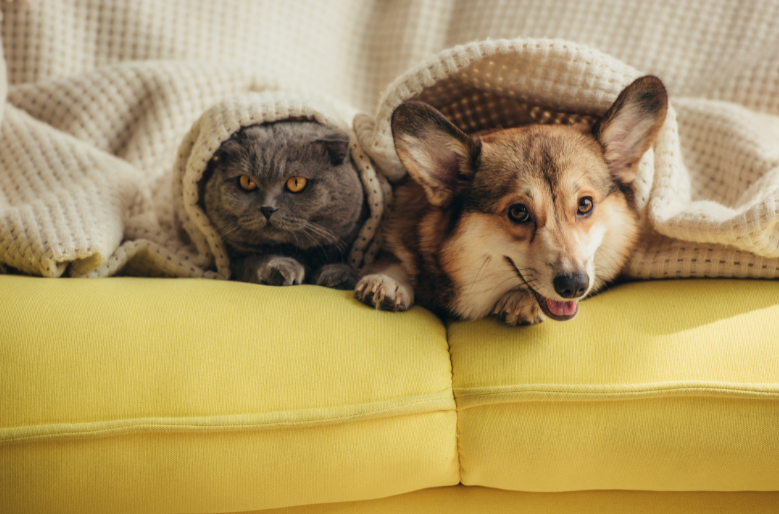
- Hair Remover. Getting pet hair off your clothes, carpet, furniture, and out of your car can become an all-consuming challenge. But the right pet hair remover can make the job a lot simpler. You might even be able to wear that black shirt again. Here are the 8 best pet hair removers of 2024, tested and reviewed by The Spruce Pets.
- Rubber Glove. If pet hair is set into your furniture, use a rubber glove to get rid of it. Simply dampen a rubber glove, something that you probably already have on hand for washing dishes, and run it over the furniture to attract and collect hair.
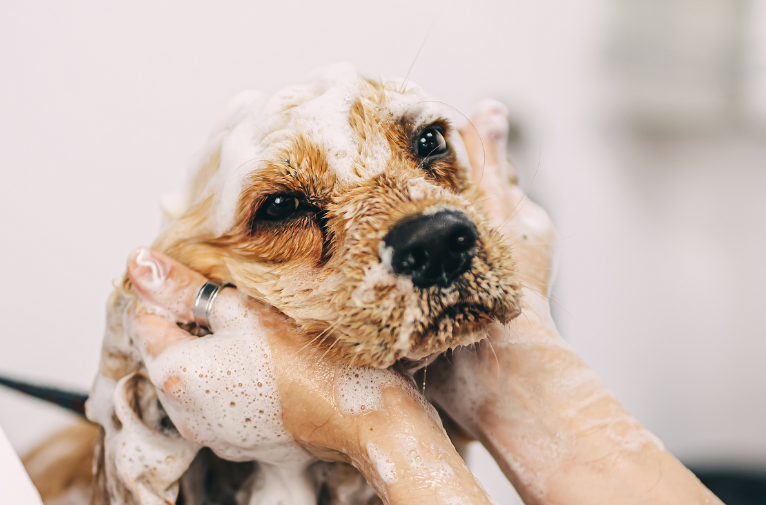
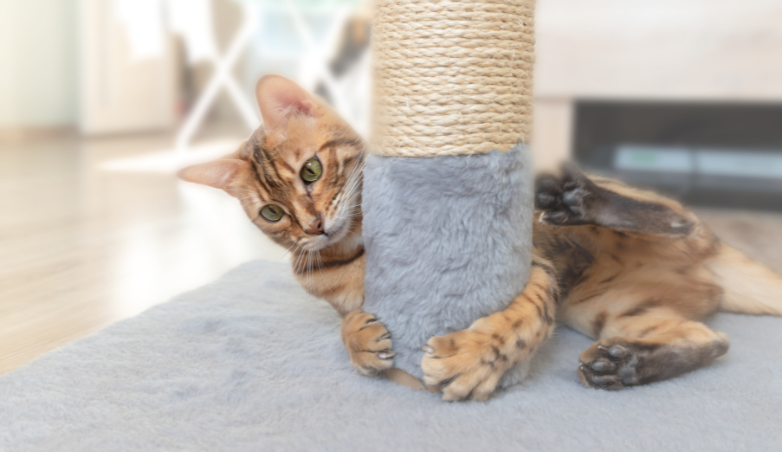
- Groom. Brush daily and bathe regularly to help keep your place hair- and dust-free. Trim nails whenever they get long to protect your floors and doors from scratching damage. It's important to know how to cut your pet's nails to avoid hurting them. If you’re a chicken like I am, consider going to a groomer or your veterinarian. Speaking of nails, keep kitty from scratching your furniture by purchasing a scratching post. Cats scratch to mark their territory and sharpen their claws; offering designated scratching surfaces can redirect this behavior away from furniture and other areas of your home.
STINK
- Baking Soda. Pets can be stinky leaving funky odors in their wake especially in their favorite areas of the home. Baking soda has odor-neutralizing properties and can be used to absorb and eliminate unpleasant smells. Sprinkle it on carpets, furniture, and pet bedding, let it sit for 15 to 30 minutes, and then vacuum.
- Wash Pet Bedding Regularly. Whether it’s your pup’s bed or your kitty’s tower, pet bedding must be cleaned regularly to prevent odors and pet hair buildup. Be sure to use pet-safe detergents! Consider using covers that can be easily removed and washed. My pup’s bed is small enough to toss in the laundry, but my brother’s 75-pound dogs have sleeping quarters almost as big as a twin bed, so a removable cover is a must. If you do have a cover that isn’t removable, sprinkle the bed with baking soda and let it sit for 10 to 15 minutes, then vacuum.
- Quick Clean Up. Cleaning up pet messes promptly and effectively is essential for maintaining a clean and healthy living environment. Start by scraping up as much of the mess as possible. Then, clean the areas by scrubbing them with water and a pet-safe detergent. If odors remain, sprinkle the area with baking soda, let it sit, then vacuum.
- Odor Control Litter. Let littler help control smells. Good Housekeeping tested and reviewed 20 litter brands to find the vest. Their top 11 picks are easy to scoop, control odors and don't stick so much to cats' paws, which can lead to litter particles on the floor.
DRAINS
- Protect Your Shower Drain. Getting pet hair in your shower during bath time is inevitable, but there are ways to minimize shedding for easier cleanup. Brush your pet before her bath to help remove loose fur. Be sure to use a grooming brush appropriate for your pet's coat type to reduce shedding during the bath. Place a hair catcher over the drain, which keeps pet hair from causing clogs. It’s also very helpful in keeping your own hair out of the drain. Find the best ones here.
SPLATTER SCATTER
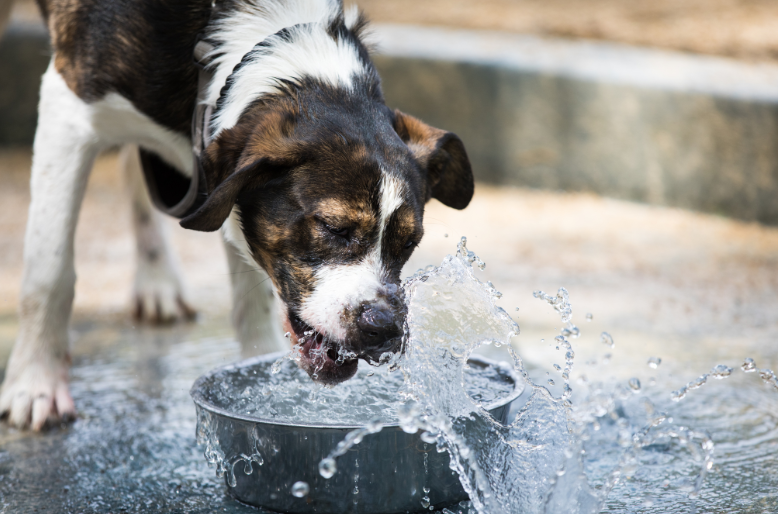
- Food Mat. My little guy drinks like a crazy animal and splashes his water everywhere. One of my brother’s labs attacks her food bowl with such force, the food flies. A great resolution is to place a mat under their dish. Mats can catch any spills and make cleanup so much easier. Look for a mat that will be easy to clean. A non-skid mat will help prevent your pup from pushing bowls around.
- Litter Mat. If you have a cat, you know they have a propensity for kicking litter out of their litter box. Keep it contained by using a litter mat, which is made with a mesh material designed to trap litter. These textured mats act like a doormat. Even the most well-behaved kitty will track litter granules out of the litter box. A good litter mat catches most of those bits before they spread throughout your house. Find New York Times Wirecutter’s top three litter mats here.
- Litter Box. You can also avoid the spread of litter by choosing the right litter box. A litter box with higher sides prevents cats from kicking or scattering litter outside the box (does your cat love doing this?) People has tested and reviewed 15 of the best litter boxes.
PAWS
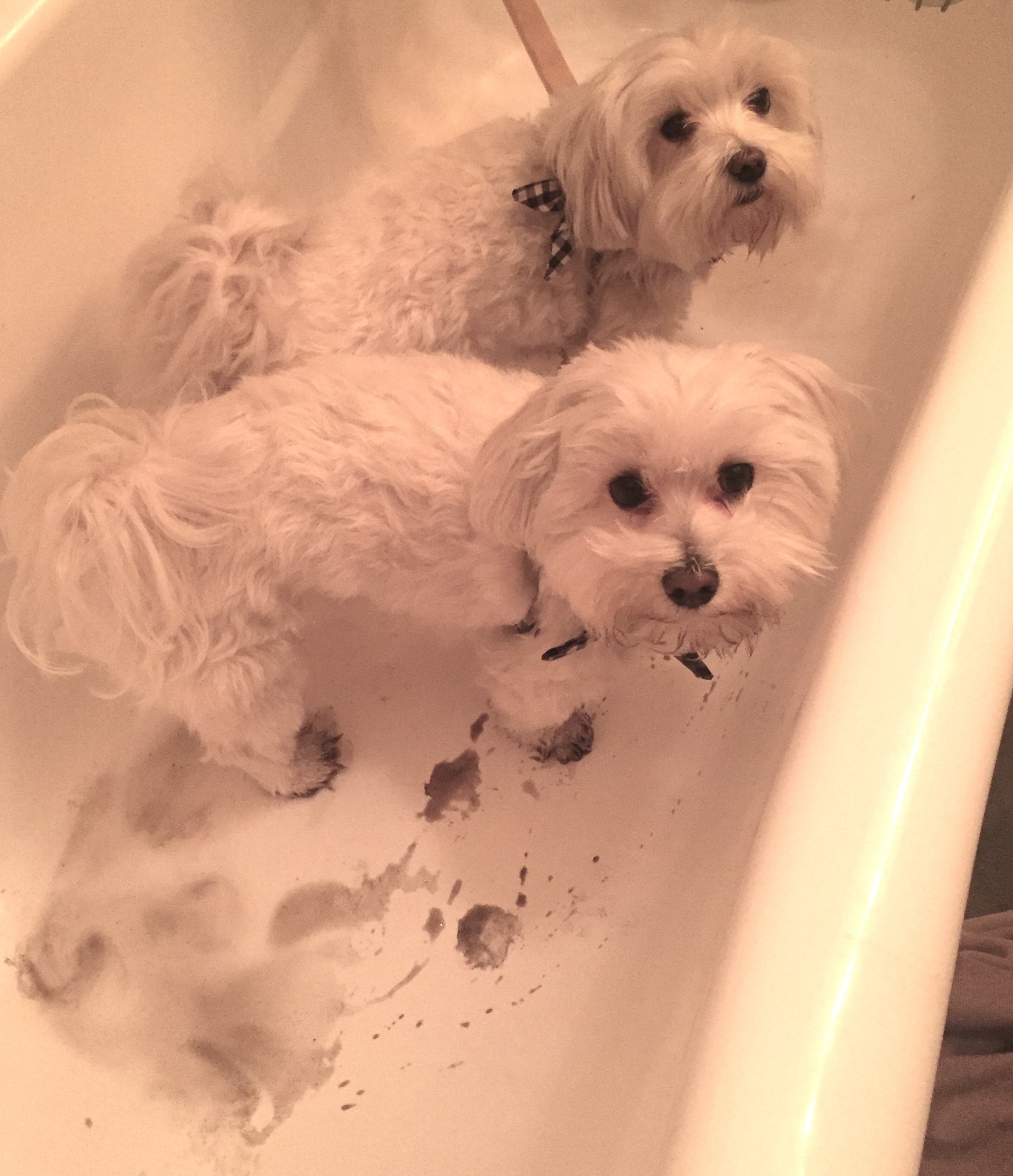
- Wipe. Wipe your pet's feet when they come inside. While it might not be necessary to wipe every time they come inside, it's a must in certain instances. A walk during a rainstorm, after a storm when there are mudpuddles, when there is snow on the ground, and when playing in the yard or dog park (where a little time may be spent digging) are all times when paws will get dirty. I once lived in the historic section of a small town, and that old neighborhood seemed to have decades of dust and dirt everywhere. Even when we stuck to the sidewalks, my pups (there were two then) would come home looking like they were wearing brown socks. Sometimes a wipe with a damp cloth will do the trick. Other times a foot wash is in order. With my short guys, sometimes it was a half bath involving feet, legs, bellies, and chests. Chewy has 10 top-rated wipes for dogs and these wipes for cats.
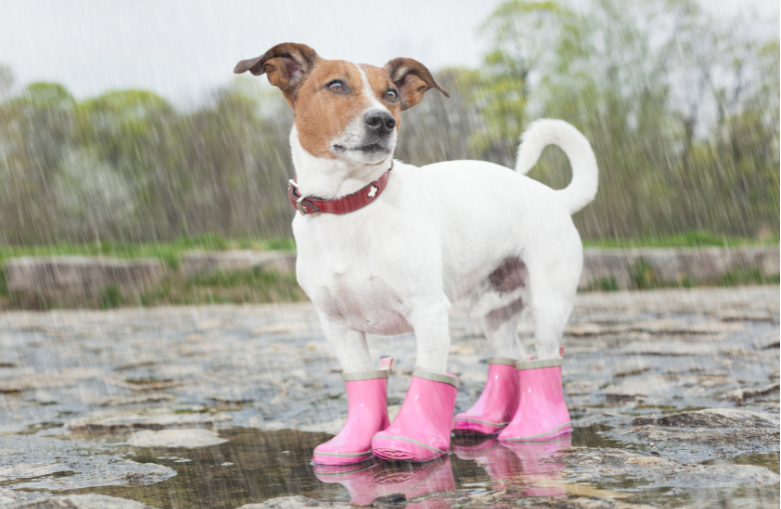
- Cover. When it’s really mucky outside, boots make a word of difference. It took many tries for me to find the right foot cover for my pup; many dogs just don’t like wearing a boot (although they look SO CUTE!). After losing three of four adorable zip-up red boots with fur trim ($50 down the drain) in a snowstorm, I thought we were through with boots and any real chance of a successful walk in the snow. The gamechanger for me – and Ollie – was Pawz Waterproof Boots. They are not only lightweight and waterproof; they also can’t be easily kicked off.
Imagine being able to love your pet unconditionally along with your nice clean home now free of all the dirt, hair, and stink your four-legged baby brings with him. Now you can. You’re welcome, and tell your dog we said, “Hi!”
The post TAME THAT HAIRY BEAST appeared first on Fath Properties Blog.
]]>